
Entry-level producers are often confused by the "secret code" of letters and numbers in Texas Longhorn ID systems. In 2026, no key exists to decipher all the garbled words, numbers, and codes that are supposed to identify an animal. If you read this essay, however, you can decide whether or not such a cryptic puzzle makes any sense.
A prefix is a letter or group of letters added to the beginning of a root word to change its meaning. A suffix is added to the end of a word to alter its meaning or grammatical function.
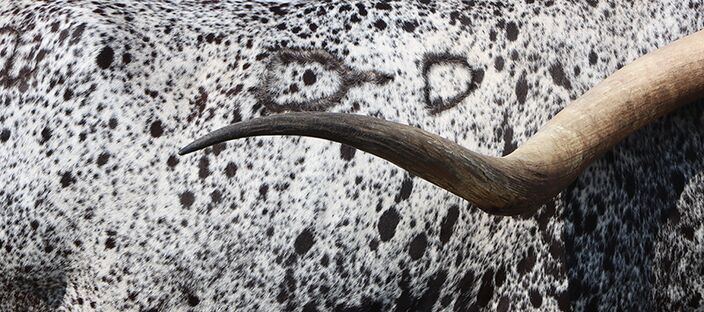
~~The first and oldest prefix for Texas Longhorn brands is WR—the “holding brand” from the 1930’s of the Wichita Mountains Wildlife Refuge. The rest of the brand was an Identification Number (ID). (Numbering is not very original, but the government is not known for creativity.) That format of brand-plus-number was the registered name of every Wildlife Refuge critter, such as WR 4356. Something above 10,000 cattle have been branded with WR, making it the best-known prefix code for Texas Longhorns. But unless people know what WR stands for, that prefix is like winking at a lady in the dark—only the winker knows what it means.
~~The same discombobulation holds for suffixes at the end of a brand, like HR in Rebel HR. The final two letters identify the breeder as Harrell Ranch. Likewise, ECR in Cornerstone ECR identifies El Coyote Ranch, if you know what the initials stand for.
Suffixes and prefixes are a matter of choice. If you’re Googling, they can help locate an animal—but not easily. Most folks might recall a great bull’s popular name, but they don’t remember the initials in his prefix or suffix. For instance, the famous WT Kid Rock isn’t Kid Rock. Instead, he’s listed by only his official full name, which includes the prefix WT.
These details can be hard to remember. They tend to quickly get complex and aggravating, so people sometimes just leave off the prefix or suffix. Eventually, official names get shortened. For instance the famous bull that is officially JP Rio Grande is typically referred to as Rio, an unofficial name that is shorter, more convenient, and much easier to remember.
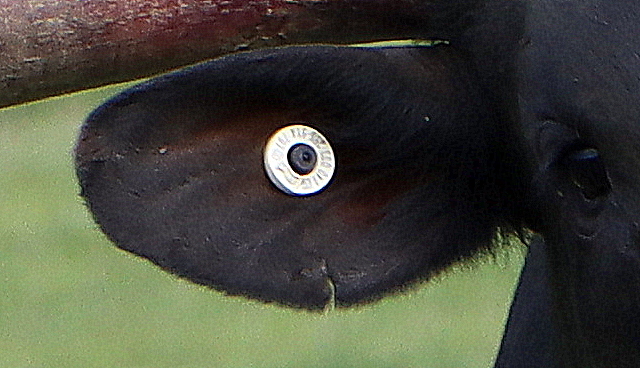
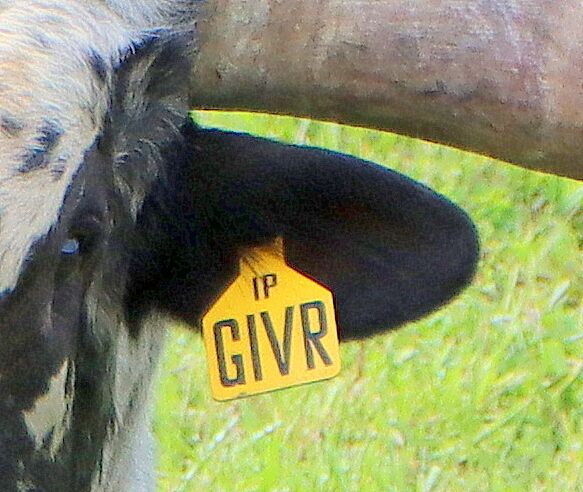
~~In Europe, governments control cattle registrations and have taken big bites out of producers’ profits. Often they require registration inspections, DNA PV, and even quotas of how many cattle a producer can maintain. Curiously, European regulations mandate an ear tag, because fire brands are considered inhumane. (Objections to fire-branding deserve another article, but remember that any branding pain is brief and literally superficial.) Ironically, a bunch of permanent holes punched in the ears is considered okay.