
TLH - Newsletter (englisch)
Used courtesy of Dickinson Cattle Co. USA

Frozen Horns - A Study in Climate Change
Erstellt am: von Longhorn
DCC Ranch e-News #423 - 11-15-25
by Darol Dickinson
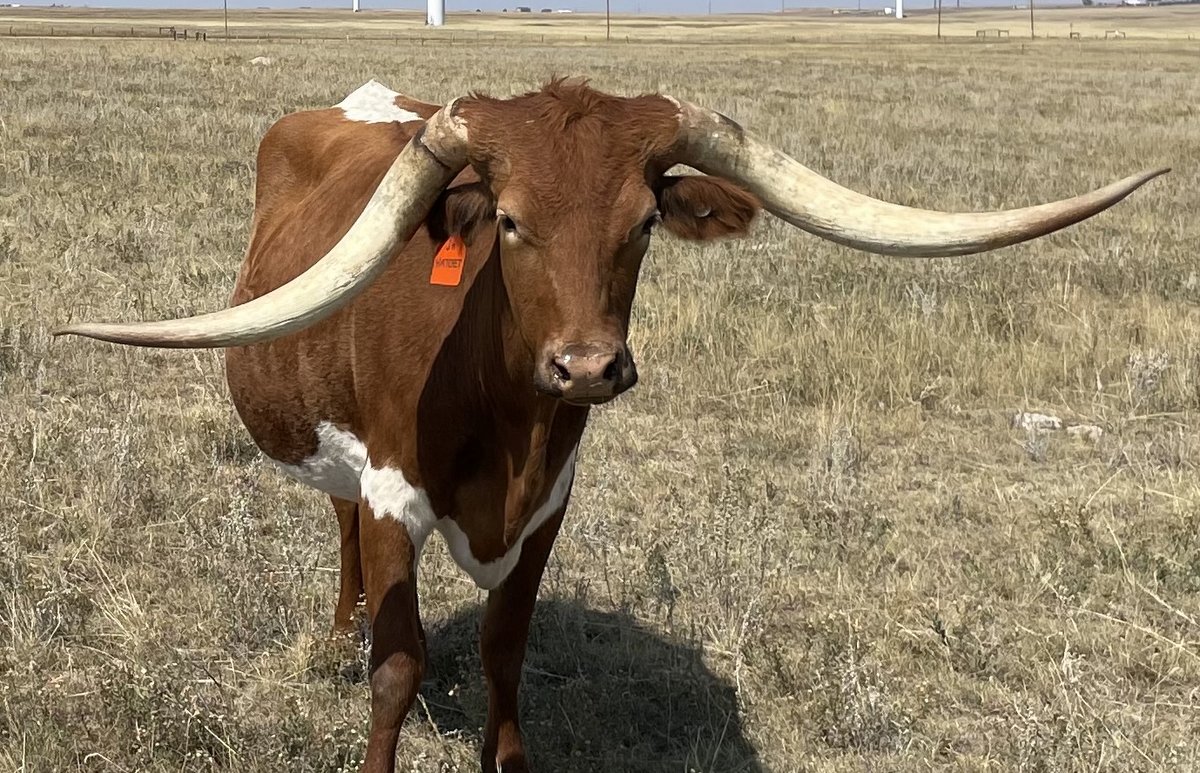
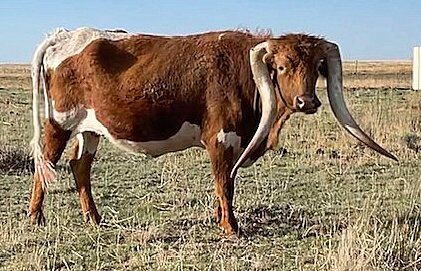
Horns freeze easier than hide. Obviously a horn 3" thick can freeze and die, yet other parts of the body are protected from freezing by their hide covering and additional blood supply.
Temperatures in the -20 degree range will normally not freeze horns, but an added chill factor of 30 mph wind or more will almost always cause some horn damage. Windbreaks or sheds will minimize the chill factor and can prevent freezing.
Many cattle will freeze one horn while the other remains alive. Most ranchers believe that when cattle huddle during a storm, the horn extended out in the wind is more at risk than the horn that may be more protected by the herd’s body heat and wind protection.
With years of evaluation, most who have raised Texas Longhorns have observed certain phenomena. There is some consensus that cattle raised in the north country grow slower horn and a thicker horn shell. By contrast, cattle in warmer southern climates grow horn faster with a thinner shell. The thin shells are more prone to freeze than the thick ones when southern cattle are moved north. Consistent with horn, northern cattle often have a slightly thicker hide than tropical or sub-tropical cattle.
Horn has mostly three components. The outer shell is a high-protein substance with elements very similar to finger nails and hair. Inside is a porous bone of high-percent calcium. Inside the bone is a flowing blood supply. The bigger horns have more blood supply than smaller ones. Most believe that small horns freeze quicker and more often than thicker ones.
The warm blood flow creates some warmth for the whole horn. A careful hand-squeeze shows that a living horn is usually warmer than a dead horn.
Longhorns--similar to Scottish Highland cattle--grow long, heavy hair around the horn base to stimulate horn growth and help protect the blood supply in that high-growth area. Recent trends in showing, both halter and loose cattle (especially futurities) have determined that clipping (as in non-horned breed shows) makes horns appear longer. Clipping is a bad practice for cold-country cattle--and may even cause slower horn growth in general.
Cattle under poor grazing conditions have less horn-freeze resistance than cattle that are well fed with corn or grains.
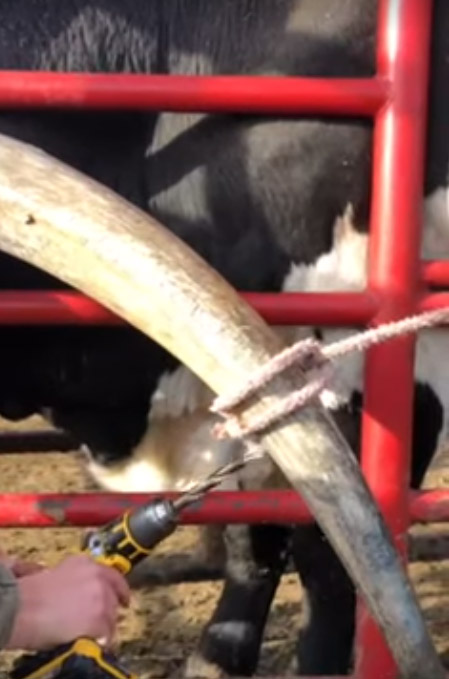
Click here for video: You Tube
-
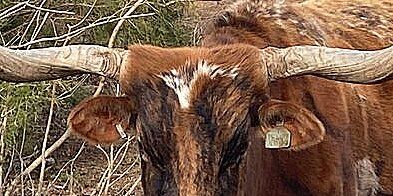
Deep, brutal horn rings near the head most likely are not a result of freezing, unless the horns start to droop. This trait is found on older cows who have retained a placenta or had some sickness or fever. These phenomena are not studied by university researchers, so the jury may be out on them for a while. They are not genetic and may have several causes. -

This cow had both tips freeze and die her first winter. The horn continued to grow, but the trauma caused a fake shape instead of the original genetic shape and direction. -
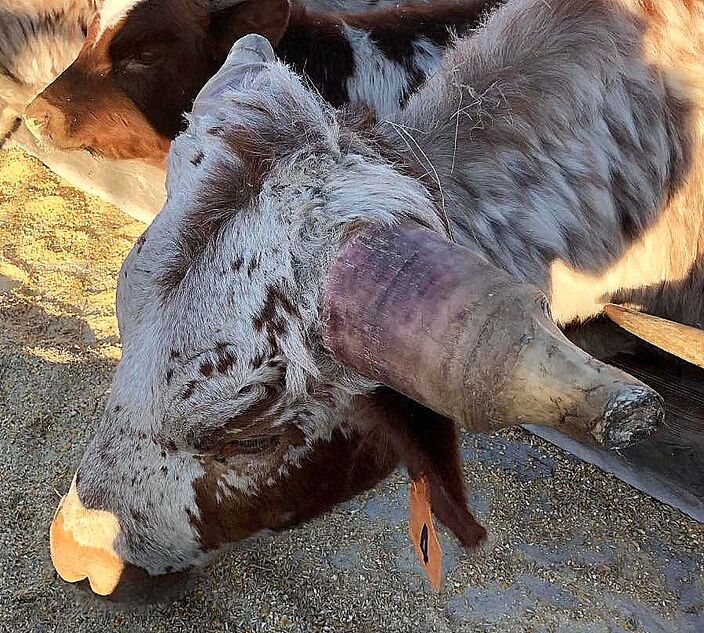
When this critter froze a horn, the inner horn sealed itself off, the outer shell came off, and this new odd growth grew out. -
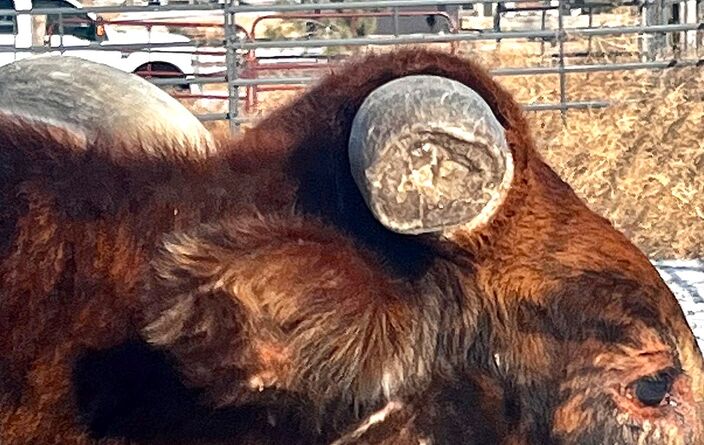
This is a typical freeze. One horn is unharmed while one dies and falls off. The inner core seals itself off and a stub of horn starts to grow back. Unlike some other animals, bovine horns grow from the head out, rather than by extension of the tips.
It is reported that the Okanagan Game Farm in Kaleden, British Columbia, has a Watusi herd with good success of retaining horns in some of Canada’s brutal Winter weather. The Okanagan shelters its Watusi with 3-sided sheds that help minimize wind chill.
Although nothing is darker than the inside of a cow, try to understand all the factors of weather and follow practices that can reduce losses. Every rancher has to find the management practices that work at their parallel on the earth.
*Thanks for photo contributions from Freeman Ranch, Silverado Ranch, Dickinson Cattle Co., Bud Adolfs and video by Doug Burris.
Dickinson Cattle Co., Inc.; 35000 Muskrat Rd.; Barnesville, OH 43713; 740 758-5050